

Instagram users don’t treat the app like a photo album anymore. They treat it like a search engine, and when Instagram can’t answer, they take the question to Google. What does this new button mean? Why did my reach drop? Who did they just follow? Can they see that I looked?
A September 2026 study of 5,282 real Instagram searches from 28 days of Search Console data found that 54% are questions, Stories make up more than half the demand, and page-one results in positions 4 to 10 get clicked only 0.44% of the time. People are asking more than ever. They’re clicking less than ever. And the answers they skim are often wrong.
That’s the clearest snapshot yet of Instagram search behavior in 2026, and it reveals a lot about the Instagram questions people ask and the answers they never get.
Here’s what we’ll cover:
- What the data is, and how far you can trust it
- Why Stories dominate search intent but rarely earn a click
- The follower questions Instagram refuses to answer natively
- How AI answer boxes recycle dead advice
- What Instagram actually rewards in 2026, on the record
- The content gap nobody has filled yet
Recently-Followed exists for the questions in this data that Instagram won’t answer inside the app. If yours is “who did they just follow,” you can see who any public account recently followed in seconds, with no login and no trace.
What the Data Is (and Isn’t)
The figures come from 5,282 real Instagram searches captured through Google Search Console over 28 days ending 8 September 2026. Every query contained “instagram,” and each one was grouped into a theme by keyword rules. A search counted as a question when it started with words like how, what, why, can, does, or where.
The critical read: Search Console only records searches where a page actually appeared in results. So theme shares reflect which topics surfaced, not every Instagram search typed into Google. Treat them as a strong signal, not a census.
What travels well is the click behavior. Click rates by ranking position reflect Google’s results page itself, the AI answers, carousels, and question boxes stacked above organic links. That’s the part every brand building an Instagram content strategy should study closely.
The Most Searched Instagram Questions Right Now
The Instagram questions people ask most fall into five groups. The top two in the dataset were what reshares mean on a story and what spotlight means, but the pattern behind them matters more than the ranking.
| Question type | What people type | What they really need |
|---|---|---|
| New feature meanings | “What does reshare mean,” “what is spotlight” | A one-line definition |
| Missing features | “Where did my story drafts go” | A current menu path |
| Privacy | “Can they see I viewed their story,” “can they see I searched them” | A clear yes or no, with exceptions |
| Follower activity | “Who unfollowed me,” “who did they just follow” | A method or a tool |
| Fixes | “Why is my reel blurry,” “why is Instagram using so much storage” | Device-specific steps |
Two things stand out. First, almost none of these are strategy questions. People search Instagram to understand the app itself. Second, the privacy questions tend to cluster around Stories, the one place Instagram broadcasts who watched. That’s why guides on checking Instagram stories anonymously keep pulling steady search demand.
The #1 Theme: Stories Own 54% of Demand
Instagram Stories accounted for 53.9% of every time her pages were shown for an Instagram search, across 1,710 distinct searches, with a click rate of just 0.21%. Reels held 10.7% of the demand and a 1.62% click rate, roughly 7.7 times higher.
| Theme | Share of distinct searches | Share of times shown | Click rate |
|---|---|---|---|
| Stories | 32.4% | 53.9% | 0.21% |
| Reels | 14.0% | 10.7% | 1.62% |
| Followers and unfollowers | 15.4% | 6.6% | 1.18% |
| Views and reach | 12.2% | 7.6% | 2.42% |
| Posting, captions, hashtags | 13.2% | 7.7% | 0.21% |
| Privacy and who can see | 6.0% | 1.6% | 0.98% |
What people actually ask about Stories
Not strategy. New feature names nobody explained.
The top question in the dataset was what reshares mean on a story, followed closely by what Spotlight means, both introduced without an in-app explanation. Close behind: where story drafts went.
Then there’s a quieter layer. Can they see I viewed their story? Why does the same person always sit first on my viewer list? Those are privacy questions wearing a Stories costume, and they need more than one line. Our breakdown of Instagram story viewer order takes on the most common one.
Why Stories still matter for brands
Low clicks don’t mean low value. Stories are where conversation happens. A question sticker, a poll, or a behind-the-scenes clip invites replies that land straight in DMs, and that private back-and-forth is how accounts build deeper connections with their target audience.
Pro tip: a page-one ranking on a Stories definition is close to worthless for traffic. The clicks live in the follow-up questions, the ones that need steps, context, or a tool.
The #2 Theme: Following and Follower Activity
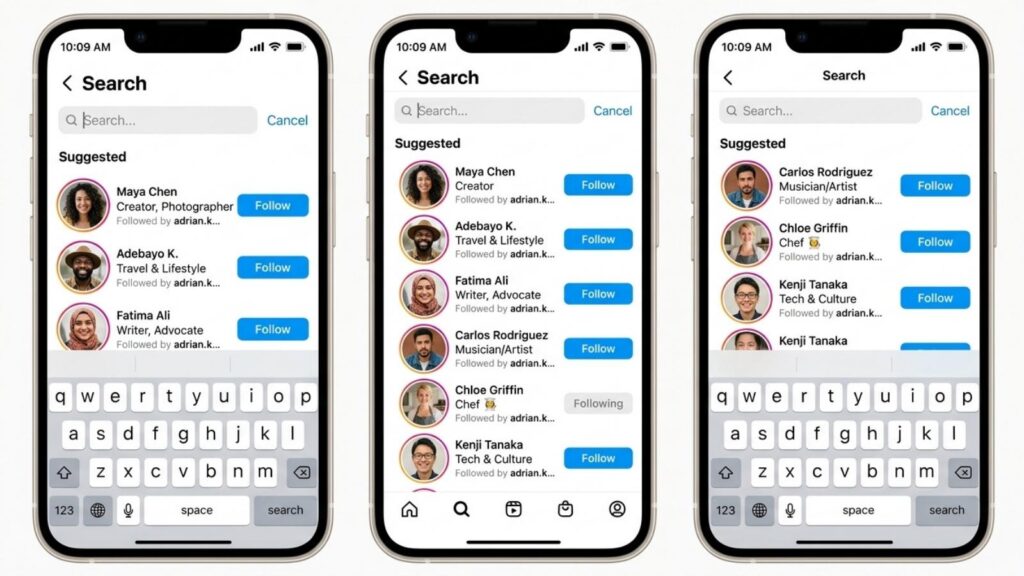
Followers and unfollowers make up 15.4% of distinct searches, second only to Stories, and click at 1.18%, more than five times the Stories rate. The study notes that follower, unfollower, and privacy questions earn clicks at four to ten times the Stories rate, since the answer needs steps or a tool rather than a sentence.
Fewer people ask. But the ones who do need a real answer.
What people want but can’t find
Almost every high-intent follower question is about something Instagram used to show, or never showed at all.
| What people search | Native answer in 2026? | What actually works |
|---|---|---|
| Who unfollowed me? | ❌ No unfollower list | Comparing follower lists over time |
| Who did they just follow? | ❌ Following list isn’t chronological | A public-data follow tracker |
| Why is the following list out of order? | ⚠️ Algorithmic, never explained in-app | Knowing how the sort works |
| Where did mutual followers go? | ⚠️ Reduced to a “Followed by” label | Cross-referencing lists |
| Who viewed my profile? | ❌ Not tracked for anyone | No answer exists |
Every row except the last has a workable answer. None of them live inside the app, which is exactly why these searches get clicked. We’ve covered each in depth, from who unfollowed me on Instagram to how Instagram’s following list is sorted to why mutual followers disappeared.
Critical take: follower count gets the attention, but the social graph behind it is what people are really curious about. Who connects to whom, and when. Instagram uses that graph constantly to rank your feed. It just won’t show it to you in readable form.
Why AI Answers Are Making This Worse
Page one used to be the finish line. In this dataset, it barely works.
Positions 4 to 10 carried 69.3% of all impressions and earned a click 0.44% of the time. Positions 1 to 3 earned 2.89%. The study points out that a comparable 2019 analysis expected a 5 to 8 percent click rate at position 5, and blames the AI Overview, video carousel, and People Also Ask box now sitting above the first organic result on nearly every Instagram query.
| Position | Share of impressions | Click rate |
|---|---|---|
| 1–3 | 1.0% | 2.89% |
| 4–10 | 69.3% | 0.44% |
| 11–20 | 11.8% | 0.56% |
| 21+ | 17.8% | 0.30% |
Low clicks would be fine if the answers were right. Often they’re stale, or quietly contradict each other.
Dead advice, served confidently
Hashtags. Older guides still push 30 hashtags, or “15 minimum,” or a formula of popular, mid-size, and branded tags. That strategy died when Instagram announced a universal limit of five hashtags per post in December 2025, after testing caps as low as three. Instagram’s own announcement said fewer, more targeted hashtags improve both performance and people’s experience. An AI summary blending pre-2025 guides can still hand you the 30-tag playbook.
Shopping stats. The line about 130 million accounts tapping shopping posts every month still shows up in 2026 articles. Instagram published that number in March 2019, alongside the launch of checkout. It’s seven years old.
Reels length. Some sources swear 15 to 30 seconds is optimal. One 2026 analysis found 30 to 60 seconds produced the highest reach rate, and Reels over 3 minutes aren’t recommended to non-followers at all. Same question, opposite answers, and the AI box picks one without telling you.
Invented announcements. Some 2026 guides cite a December 2025 Mosseri memo about a “year of raw content.” One tracker of Instagram updates found that memo is cited without any URL and concluded it doesn’t exist. The raw, unpolished content trend is real among creators. The official memo appears not to be.
The complaint searches get the worst of it
“Why is Instagram…” questions performed worst of all: 186 complaint and error searches with a 0.09% click rate, the lowest of any theme, as forum threads and generic help pages dominate and the AI answer guesses.
The real damage: someone gets a confident one-liner, never clicks, and acts on it. Brands lose the traffic. Users lose the accuracy. The only winner is the answer box.
What Instagram Actually Rewards in 2026
A huge share of Instagram marketing searches boil down to one question: what does the algorithm want? The honest answer is shorter than most guides admit.
The three signals on record
In January 2025, Mosseri said it plainly: “The top three signals that matter most for ranking are watch time, likes and sends.” Social Media Today’s breakdown adds his caveat: likes count slightly more for followers, sends slightly more for reaching non-followers.
- Watch time. Instagram counts the full play time of a Reel, including replays, not views past a fixed second. A short video people finish and rewatch beats a long one they abandon.
- Likes per reach. Your most important metric for existing followers.
- Sends per reach. DM shares. The strongest signal for discovery, since a send is a personal recommendation.
Notice what’s missing. Comments were absent from his list entirely, and no weights or multipliers have ever been published. Anyone quoting exact percentages is guessing.
Instagram isn’t one algorithm
There’s no single ranking system. Feed, Stories, Explore, and Reels each rank with their own model. Feed predicts five interactions: time spent, comments, likes, shares, and profile taps. That’s why a Reel can take off with strangers and barely reach its own followers.
Originality beats reposting
Instagram’s official statements say original content is actively preferred over reposts, and watermarked or low-resolution Reels get shown less. Reports indicate accounts posting 10 or more reposts in 30 days get pulled from recommendations entirely.
Original audio vs. trending audio: trending audio rides existing interest, which can help a short-form video find viewers fast. But nothing on record from Instagram names trending audio as a ranking factor. Original audio makes you the source others build on. The safest play is simple: original content first, trending sounds as seasoning.
Post types have different jobs
| Post type | Best at | Why |
|---|---|---|
| Reels | Discovery | Recommended to non-followers |
| Carousel posts | Saves and depth | Swipes add time spent |
| Static posts | Quick brand moments | Fast to create, low effort |
| Stories | Conversation | Replies go straight to DMs |
One 2026 analysis claims carousels get 3.1x higher engagement than single-image posts. Treat any single multiplier with caution. The direction is consistent across sources, even when the numbers aren’t.
Keywords beat hashtags for Instagram SEO
People search Instagram in words now, not tags. Someone types “best coffee Austin” or “carousel templates for small businesses,” and Instagram matches it against captions, alt text, and profile text. Relevant keywords in your first line do more than a hashtag block ever did.
The stakes rose further in 2025. Since July 10, 2025, public content from professional accounts run by adults has been searchable through Google and other search engines by default. A well-written caption can now rank on Google too, turning feed posts into landing pages.
Pro tip: describe the post the way your target audience would search for it. “Funny office Reel” helps nobody. “How we pack 200 coffee orders a day, behind the scenes” matches real search intent and gives the algorithm something to categorize.
For brand accounts tracking which of these signals actually move for them, our guide to building a weekly Instagram tracking report turns them into a repeatable process.
The Questions With No Good Answers Yet
Put the themes, click rates, and stale answers together and a clear gap appears.
1. Device-specific fixes
The complaint list is full of practical problems: storage bloat, sudden verification or ID requests, Reels going blurry after posting, lagging uploads, and Stories that won’t share to Facebook. The study’s advice is a page naming real causes in order, with exact iPhone and Android menu paths and no padding.
2. New features in week one
Notes, Threads, broadcast channels, collabs, spotlight, and trial reels were 2.6% of distinct searches but 17.4% of impressions. The first plain-language explanation after a launch owns that demand for months, since the help center lags.
3. Activity Instagram hides
- What someone liked. The old Following tab showed friends’ likes and follows. Instagram removed it in October 2019, and the heart icon has shown only your own activity ever since.
- Who someone recently followed. Public, but unsorted, so nobody can read it in the app.
- Who viewed a profile. Never tracked for anyone. Every “answer” here is a scam.
The first two are solvable with public data. The third has no answer, and honest content says so.
4. Dated, sourced marketing answers
Given how much stale advice circulates, the rarest thing on the internet is an Instagram strategy answer with a date and a source. Most people never see one.
| Gap | Why it stays open | What a good answer needs |
|---|---|---|
| Device fixes | Forums dominate, AI guesses | Causes in order, iPhone and Android paths |
| New features | Help center lags | Plain definition within a week |
| Hidden activity | Instagram removed data views | Public-data methods, honest limits |
| Strategy advice | Old stats get recycled | Dates and sources on every claim |
For brands and creators: stop chasing rankings on one-line questions. Answer in your first sentence using the words people type, since that’s what the AI box lifts. Then build what AI can’t compress into two lines: fixes, tools, and anything needing the reader’s own data.
How to Actually Find Instagram’s Hardest Answers
The fix isn’t more searching. It’s matching each question to the right source.
Step 1: Sort the question
Every Instagram question fits one of three buckets:
- Definition — “what does spotlight mean”
- Fix or strategy — “why is my reach down”
- Data — “who did they just follow”
Most frustration comes from asking the wrong source.
Step 2: Definitions go to the source
For feature definitions, the AI box usually gets it right. Double-check with Instagram’s Help Center, or long-press the feature in the app.
Step 3: Fixes and strategy need a date check
Before acting on any advice, check when it was written. Hashtag advice from before December 2025 is outdated. Algorithm claims should trace back to something Mosseri or Instagram actually said. If a stat has no source, skip it.
Step 4: Data questions need a tool
No article can tell you who a specific person followed last week. That answer lives in public data, and it takes a tool to read it in order.
Recently-Followed handles the most requested one:
- Enter any public username; no @ needed
- See their follows re-sorted newest first
- Re-check later to catch anything new
- Never enter a password, since public data doesn’t need one
For the Stories side, where “can they see I viewed it” drives so much anxiety, an anonymous Instagram story viewer lets you watch without landing on the viewer list.
Step 5: Accept the true dead ends
Some questions have no answer, and knowing that saves money. Nobody can show you who viewed your profile or open a private account. Our guide on whether people can see if you search them separates what’s visible from what never will be.
Pro tip: when a tool promises data Instagram itself doesn’t have, that’s the tell. Legitimate tools organize public data. Scams invent private data.
The 2026 Stats Everyone Quotes, Checked
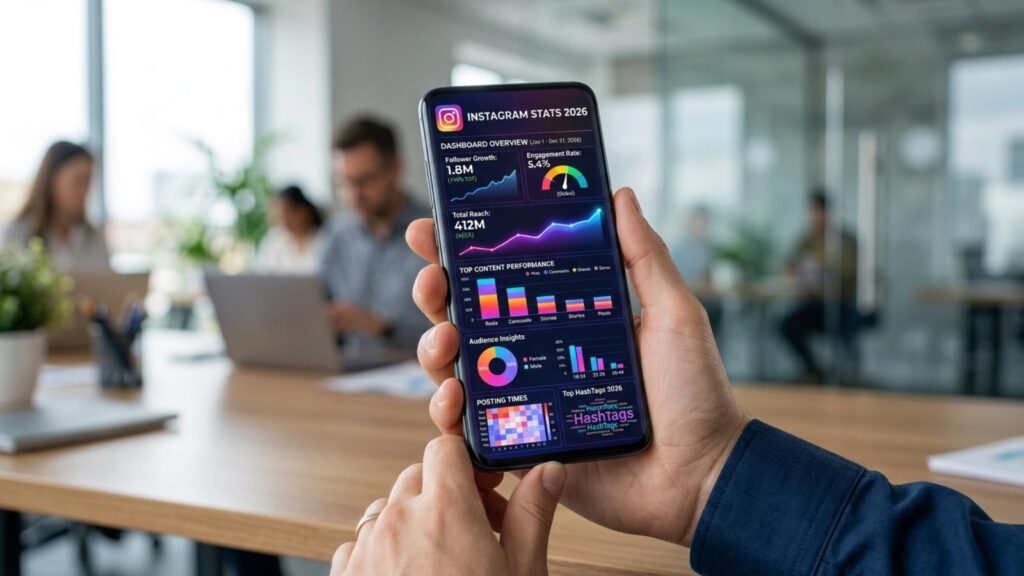
Search anything about Instagram marketing and you’ll hit the same stat lists, copied from article to article until nobody remembers where they started. Some hold up. Some contradict each other. Here’s how the most-quoted figures actually read.
| Stat you’ll see | How it’s quoted | How to read it |
|---|---|---|
| Instagram commerce revenue | $37.7 billion, as both a “projection” and a figure “reached” in 2026 | Meta doesn’t report Instagram commerce revenue on its own. When one number is quoted as both a forecast and a result, it’s an estimate |
| Reels views from non-followers | 34% in some sources, 67% in others | Both can’t be right. The direction is solid: Reels is the main surface for reaching new audiences |
| Creator economy value | $21 billion in 2026 | A third-party market estimate, not an Instagram figure |
| Active creator accounts | 67 million | No Instagram-published source behind it |
| Checkout conversion rate | 3.1% | Checkout availability varies by country and has changed over time, so one platform-wide rate is shaky |
| Brands boosting creator budgets | 71% increasing investment | A survey result. The direction matches everything else in the market |
The pattern: the exact numbers wobble, but the trends underneath them agree. Money is moving into Reels, creators, and in-app shopping. Build your content strategy on the direction, not the decimal point.
What holds up regardless of the numbers
Strip away the shaky stats and a few shifts show up everywhere, from creator behavior to what people type into the search bar.
- Micro-influencers win on trust. Smaller creators have highly engaged, specific audiences, and brands increasingly prefer depth over reach.
- One-off posts are giving way to ambassadors. Brands are signing year-long contracts with creators instead of buying single sponsored posts, since repeated exposure from one trusted voice converts better.
- Authentic beats polished. Creators leaning into behind-the-scenes and unfiltered content build trust faster than glossy campaigns do.
- Useful content gets sent. People favor actionable, shareable posts, the kind worth forwarding in a DM, over pretty ones that get a like and a scroll.
- Search intent is practical. Users actively search Instagram for local recommendations, tutorials, and products, which is why keyword-rich captions matter more than aesthetics.
Year-long ambassador deals rarely appear out of nowhere. A brand usually follows a creator weeks before the partnership goes public. Watching which micro-influencers your competitors recently followed is one of the earliest signals you’ll get, and it’s all public data. Our guide on using follower tracking for brand growth shows how to read it.
Where AI tools fit
AI now handles a real share of Instagram grunt work for brands:
- Script generation for Reels hooks and captions
- Posting-time predictions built from past engagement data
- Automated DM replies that keep a 24/7 presence for customer questions
Useful, with limits. Instagram labels AI-generated content, and the signals it rewards most, watch time and sends, come from content people genuinely care about. AI can speed up the process. It can’t manufacture the reason someone hits send.
How to vet any stat before quoting it: find the original source, check the date, and confirm what’s being measured. If a number has no source, two conflicting versions, or a date older than the feature it describes, leave it out.
Straight Answers on What Instagram Hides
Why does Instagram hide so much activity?
Two reasons. Privacy, since features like the old Following tab surprised users who didn’t know their likes were visible. And control, since algorithmic feeds let Instagram decide what you see instead of your friends’ activity. Most of the data still exists. Instagram just stopped displaying it in readable form.
Is there a way to see everything someone does on Instagram?
No. On public accounts, you can see posts, comments, follower and following lists, and with a tracker, recent follows in order. DMs, searches, profile visits, and private account content stay locked for everyone.
What are the top Instagram trends in 2026?
Keyword search replacing hashtags, raw and behind-the-scenes content outperforming heavily polished posts, DM shares becoming the key discovery signal, original content winning over reposts, and community moving into DMs and broadcast channels. Social commerce keeps growing, but check the date on any shopping stat before quoting it.
What are the most searched Instagram questions in 2026?
In this dataset, the most searched Instagram questions were about new feature names: what reshares mean on a story, followed closely by what Spotlight means. Both features launched without in-app explanations, which is exactly why they spike.
How many hashtags should I use in 2026?
Five at most. Instagram capped hashtags at five per post and Reel in December 2025. Any advice recommending 15 or 30 predates the change.
Are AI answers about Instagram reliable?
For simple definitions, mostly. For strategy, stats, and settings, check the source date. AI summaries blend old and new guides, and Instagram changes fast enough that a two-year-old answer can be flat wrong.
Can I see who viewed my Instagram profile?
No. Instagram doesn’t record profile visitors for any account type, so no app can show them. Any tool claiming to is after your login or your money.
Find the Answers Instagram Hides with Recently-Followed
People aren’t short on Instagram questions. They’re short on answers they can trust. Stories definitions get handled in one line, strategy advice gets recycled past its expiry date, and follower activity questions, the ones Instagram hides, still send people hunting.
Key takeaways:
- 54% of Instagram searches in the dataset are questions
- Stories drive over half the demand but earn a 0.21% click rate
- Follower questions click five times more, since native answers don’t exist
- Page-one positions 4 to 10 get clicked just 0.44% of the time
- AI answers recycle dead advice, from 30 hashtags to 2019 shopping stats
- Watch time, likes per reach, and sends per reach are the signals on record
- Keywords in captions now do the job hashtags used to
Your answer to “who did they just follow” isn’t in any search result. It’s in the public data. Recently-Followed shows any public account’s recent follows in true chronological order, with no login and no trace.