



You checked their following list once. You saw a few names you didn’t recognize. And then what? A single glance tells you almost nothing, because the whole story lives in what changes between checks, not in any one snapshot.
Following activity is a moving picture. Watch it as a still photo, and you miss everything that matters: the sudden cluster of new follows, the account that appeared and vanished, the slow drift toward a competitor’s world. To read those, you need to watch who someone recently followed over time, not once.
Here’s what we’ll cover:
- Why one-time checks fail, and patterns win
- What following activity actually reveals about a person
- The manual method, and everything it misses
- How a following activity tracker works, step by step
- Real use cases across brands, relationships, and competitors
Recently-Followed turns those still photos into a timeline. Enter any public username, check it whenever you want, and watch the activity build. No login, no password, completely anonymous.
Why One-Time Checks Aren’t Enough
A snapshot answers “who do they follow?” A timeline answers “what are they doing?” Only one of those is interesting.
Here’s the problem with checking once. You open a following list, see 400 accounts, and have no way to know which ones are new. Was that fitness coach followed yesterday or three years ago? The list won’t tell you. Instagram’s algorithmic sorting scrambles the order, so you can’t even use position as a clue.
Now check the same account next week. Three new names appeared. That’s a signal. You didn’t just see who they follow, you saw who they started following, and when.
Following growth rarely moves in a straight line. People follow in bursts, tied to events in their lives:
- Spike-driven activity follows a life change. New job, new relationship, new obsession, a batch of follows lands at once.
- Plateau phases mean nothing much is happening. Steady, quiet, no new interests.
- Volatile activity shows frequent follows and unfollows, someone actively reshaping who they pay attention to.
You cannot see any of these from a single check. A plateau and a spike look identical in one snapshot. Only the gap between two checks reveals which one you’re looking at.
The core limitation nobody mentions: tracking only works forward. A tool can monitor follows after you start watching, never before. Instagram doesn’t store a public history of someone’s follow activity, so there’s no back-catalog to pull. The day you start tracking is day zero. Everything before it is lost.
That’s why the best time to start tracking was last month, and the second best time is now.
What Following Activity Actually Reveals
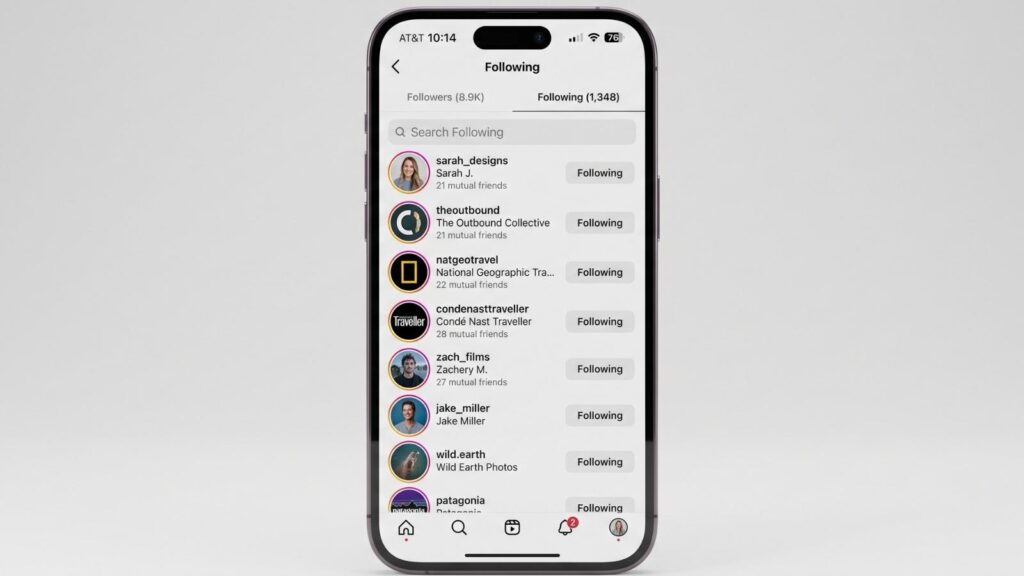
A follow is a deliberate act. Someone saw an account and chose to connect. Multiply that across time and following activity becomes one of the most honest behavioral signals on the platform.
Interests, in real time
What someone follows maps what they care about right now. Not what they posted about last year, but what they’re curious about this week. A run of follows in one category is an interest forming in public.
Relationships
This is the use case people are quietest about and most driven by. New follows often trace relationship shifts:
- A cluster of wedding vendors means a wedding is coming
- Follows tied to one new city mean a move
- A single new person followed alongside their friends and family means that person just entered the picture
We go deeper on the emotional side of this in our guide on checking which photos a partner likes, which pairs naturally with follow tracking.
Behavior shifts
The most valuable signal for research. When someone’s following activity changes pattern, something changed in their life. A quiet account that suddenly follows twenty new profiles in a week is telling you something, even before you read the names.
What it doesn’t reveal
Following activity shows choices, not thoughts. It tells you what someone did, never why. A follow can mean deep interest or an idle tap. Read the pattern, hold the interpretation loosely, and don’t build a whole story from a single follow.
How to Track Manually
Free, native, and painful. Here’s the honest version.
The screenshot method
- Open the public profile and tap the following tab
- Screenshot the entire list, scrolling as you go
- Save the screenshots with today’s date
- Repeat next week
- Compare the two sets by eye, hunting for new names
That’s the whole method. It works, technically. It also falls apart fast.
The data export method (for your own account)
For your own account, Instagram lets you download your data. Settings, then Your Activity, then Download Your Information. You get your followers and following lists in a file. Do it at intervals and compare exports to map gains and losses. Our guide on exporting Instagram followers walks through the cleanest way to do this.
The catch: you can only export your own data. Someone else’s account is screenshots or nothing.
Everything the manual method misses
| Problem | Why it hurts |
|---|---|
| No timestamps | You know a follow is new, never exactly when |
| Time-consuming | Screenshotting 2,000 follows by hand is brutal |
| Error-prone | Miss one name in a comparison, and it’s wrong |
| Scrambled order | Algorithmic sorting means new follows hide anywhere |
| No alerts | You only catch changes when you manually check |
| Doesn’t scale | Tracking three accounts this way is a part-time job |
Comparing following lists by hand is exactly the kind of task that’s technically possible and practically hopeless. For one small account checked rarely, fine. For anything real, it collapses under its own weight.
How a Following Activity Tracker Works
This is what the manual method wants to be when it grows up.
A following activity tracker reads a public following list, sorts it by recency, stores what it finds, and flags what changed since last time. The screenshot-and-compare grind, automated.
Step by step with Recently-Followed
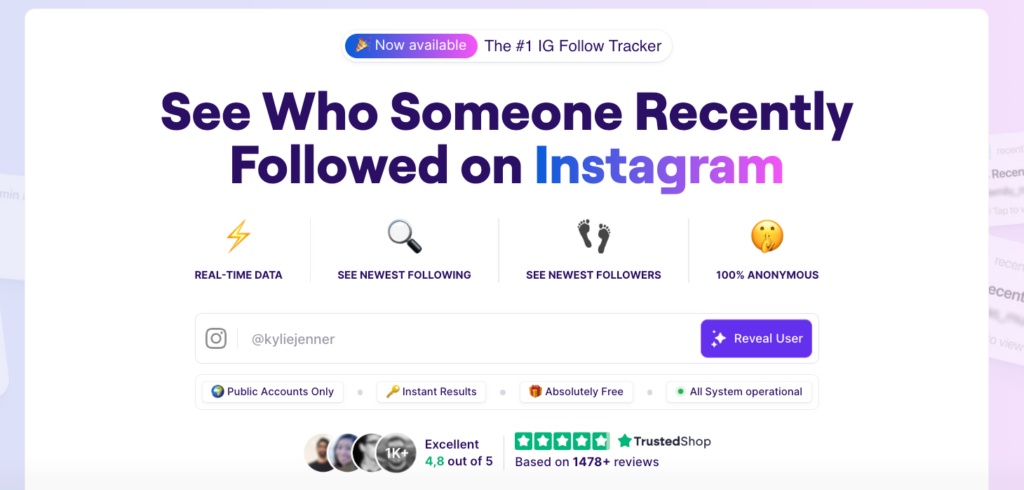
Step 1: Enter the username. Head to Recently-Followed, type the public Instagram username, no @ needed. No login, no Instagram password, no connect-your-account step.
Step 2: Pull the current following list. In seconds, the tool reads the public list and re-sorts it into true chronological order. Newest follow on top. This is the view Instagram refuses to give you.
Step 3: Read the recent activity. The top of the list is their most recent follows. This alone answers “who did they follow lately?” in one glance.
Step 4: Re-check to build the timeline. Come back in a few days and run it again. Anything added since your last check surfaces at the top, so you catch the changes, not just the current state. Each check adds a frame to the timeline.
Step 5: Watch the pattern emerge. Over a few weeks, you stop seeing individual follows and start seeing behavior. Spikes, plateaus, drifts. The story the snapshot could never tell.
Why no login is non-negotiable
The most important feature of any tracker isn’t a feature at all. It’s the absence of one: it should never ask for your Instagram password.
Using unauthorized apps that demand your login can get your account suspended, and any tool requesting credentials is either careless or malicious. Recently-Followed needs no login because it reads only public data, the same information any logged-out browser can see. That’s the whole model behind anonymous follower tracking: no credentials, no risk, no trace.
How trackers compare
| Tool | Login | Historical range | Best for |
|---|---|---|---|
| Recently-Followed | ❌ None | From when you start | Public account follow activity, anonymous |
| Social Blade | ❌ None | Historical follower counts | Public count trends, not individual follows |
| Socialinsider | ⚠️ Business connect | Up to ~2 years | Brand analytics, paid |
| Instagram Insights | ✅ Your account | ~90 days | Your own account only |
| Meta Business Suite | ✅ Your account | Date-range aggregate | Your own historical data |
| Manual screenshots | ❌ None | Whatever you saved | Small accounts, occasional checks |
Notice the split. Native tools (Insights, Business Suite) only show your own account, and only for about 90 days. Public trackers like Social Blade show counts over time, not who was followed. Recently-Followed fills the specific gap none of them cover: individual follow activity on any public account, no login required.
Real Use Cases
Here are the best use cases:
Brand monitoring
Track your own brand’s follower activity to separate real growth from noise. A follower spike after a viral post is worth understanding, so you can repeat it. A wave of blank, post-less profiles is a ghost-follower problem hurting your engagement rate, not a win.
Watching following activity also flags when your most engaged followers drift toward a competitor. That’s a retention signal no dashboard hands you, and it belongs in your weekly tracking report.
Competitor research
A competitor’s recent follows are their strategy, exposed. When they start following micro-influencers in your niche, a campaign is forming, weeks before it launches. When they follow a new tool or service account, their operations are changing. Track at regular intervals, and you see the moves before the announcements.
Relationship concerns
The quiet, human one. People track a partner’s or ex’s following activity because new follows tell a story the grid doesn’t. A tracker means you check without repeatedly opening their profile, which builds its own awkward trail. The research stays anonymous, and you never leave a footprint on their account.
Personal curiosity
Sometimes you’re just curious what a friend, a public figure, or an account you admire is into lately. Following activity is the cleanest window into what someone’s paying attention to right now.
Whatever the use case, the discipline is the same. Check at consistent intervals, watch for pattern changes rather than individual follows, and let a few weeks of data accumulate before you read too much into anything. One follow is noise. A pattern is signal.
Free Tools vs. Paid Analytics Platforms
Not every follower tracker costs money, and not every paid platform earns it. Here’s how the market actually splits.
Free tools cover the core job: reading public Instagram profiles and showing you recent followers and follow activity. Recently-Followed sits here. No free account to create, no credit card required, no premium plan gating the basics. You enter an Instagram username and read the data. That’s the whole transaction.
Paid analytics platforms solve a different problem. Sprout Social, Socialinsider, and similar third-party analytics tools build professional reports, often exportable to PDF format, aggregate engagement metrics across multiple accounts, and layer in social listening. They connect to your own business account through Instagram’s API and Facebook, and they’re built for teams, not curiosity.
| Free tools | Paid platforms | |
|---|---|---|
| Best for | Tracking public follow activity | Managing your own brand at scale |
| Login | None needed | Connect Instagram required |
| Cost | Free version, no card | Premium plan, monthly |
| Covers other accounts | ✅ Public profiles | ⚠️ Limited |
| Professional reports | ❌ | ✅ PDF exports |
The mismatch most people make: reaching for an expensive platform to answer a simple question. If you want to know how many followers an account gained and who they recently followed, a free tool answers it in seconds. Sprout Social’s limited insights on accounts you don’t own won’t, and it’ll charge you for the privilege.
Native options like Creator Studio and Instagram Insights are free too, but they only report on your own account, and only for about 90 days. For tracking other public accounts, they’re no help at all.
What Follower Data Quality Tells You
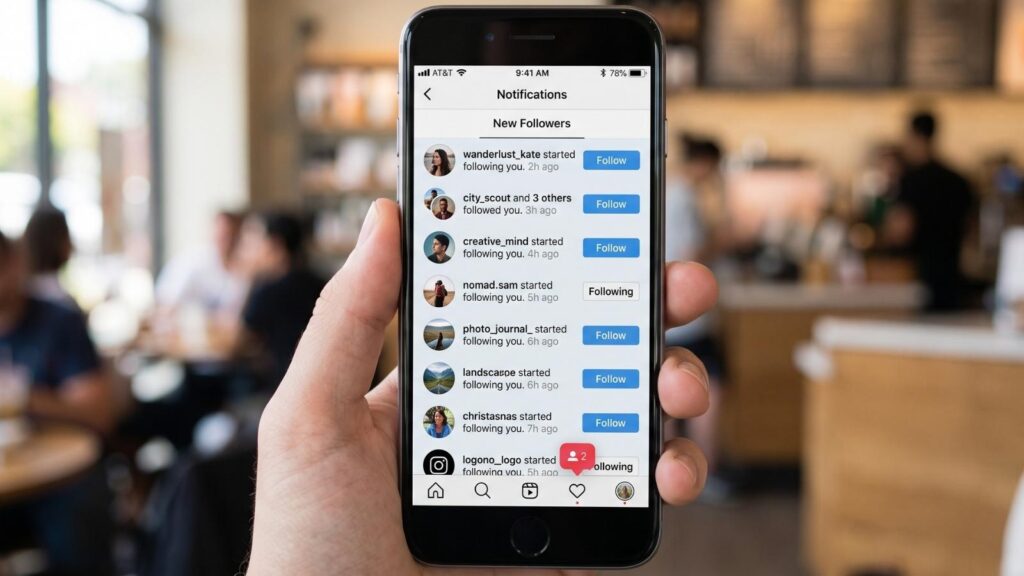
A follower tracker shows how many people follow an account. The better question is who those followers are, because raw count hides more than it reveals.
Audience quality beats audience size, every time. A smaller, engaged community outperforms a large, passive one on every metric that matters. Ten thousand real followers who comment and share are worth more than a hundred thousand who scroll past.
Reading follower data for quality means watching for:
- Inactive profiles: Accounts with no posts, no activity, following thousands. Dead weight that drags engagement rate down.
- Ghost and fake accounts: Bots that inflate the number and lower the ratio of real interaction.
- Follower trends over time: Steady organic growth looks different from a purchased spike, and the pattern gives it away.
- Secret admirers: The engaged non-followers who like and view without following. Often more valuable than half your actual follower list.
Tracking follower growth over time reveals the shape of an account’s rise. Real growth is uneven but directional. A sudden vertical spike with no viral post behind it usually means bought followers, and the engagement metrics never catch up to the count.
For personal brands, this matters more than vanity. When you track Instagram activity for the full picture, you’re measuring whether an audience is real, active, and worth the effort, not just whether it’s big. A tracking tool that shows recent followers and follow patterns gives you that signal. A raw count never will.
Pro tip: Cross-check follower growth against an anonymous story viewer check. If an account has 50,000 followers but only a few hundred story views, the follower number is mostly decoration.
Key Features of a Good Following Activity Tracker
Not every Instagram follower tracker earns the name. Some barely read a public list. Others bury the useful parts behind a login you should never give them. Here’s what actually separates a tool worth using from the rest.
- No login, ever. The first filter. A tracker that reads public Instagram followers data needs zero access to your account. Third-party apps demanding your password are the ones that get users suspended, so this feature matters more than any other.
- Real-time updates. When you track Instagram followers, the data should reflect follows as they happen, not a stale cache from last week. Good tools pull the current public state the moment you check.
- True chronological sorting. Instagram analytics inside the app won’t show you recent follows in order. A proper Instagram activity tracker re-sorts the public list newest-first, surfacing new followers at the top where you can actually see them.
- Re-check and compare. The whole point of tracking over time. Check an Instagram account today, check again later, and the tool flags what changed. That’s how you read growth trends instead of guessing.
- The ability to export data. For anyone building a record, exporting follow activity into a file beats screenshots every time. It gives you a clean history to compare against future checks.
- Anonymous by design. Whether you’re watching a competitor, a partner, or your own account, nobody should get notified. The same principle behind an anonymous story viewer applies here: read the public data, leave no trace.
Here’s a quick feature checklist for whatever you want to track:
| Feature | Why it matters |
|---|---|
| No password required | Protects your account from suspension |
| Real-time public data | Catches follows as they happen |
| Chronological sort | Shows recent follows Instagram hides |
| Re-check comparison | Reveals growth trends over time |
| Data export | Builds a lasting record |
Match your check rhythm to a posting schedule. Checking an account right after it posts often catches the follow activity that content triggers, since follows and social activity tend to cluster around fresh posts. Recently-Followed handles all of this without third-party tools stacking up, one search, public data, no login.
What People Want to Know About Tracking
How often does following activity update?
The public following list reflects follows in near real time, so a follow can appear within minutes to hours of it happening. A tracker shows the current state whenever you check, and catches changes between checks. How often you check determines how granular your timeline is. Daily checks catch more than weekly ones.
Can I track private accounts?
No. Private accounts hide all follower and following data from anyone who isn’t an approved follower. You’ll see the bio, profile picture, and counts, nothing more. No legitimate tool bypasses this, and any service claiming to track private accounts is a scam after your password or your money. Tracking only works on public accounts.
Will they know I’m tracking them?
No. Reading a public following list sends no notification and leaves no trace. Instagram doesn’t tell anyone when their followers or following list is viewed, by a person or a tool. As long as you’re not following, liking, commenting, or viewing their story, you stay invisible. The only way to expose yourself is by interacting with their account directly.
How far back can a tracker see?
Only from the moment you start. Instagram keeps no public history of an individual’s follow activity, so there’s no archive to pull. A tracker shows the current list in order and builds a timeline forward from your first check. This is why starting early matters; you can’t recover activity from before you began.
Can I track my own following activity too?
Yes, and it’s worth doing. Watch your own follower changes to spot which posts drove growth, which drove unfollows, and when fake accounts creep in. For your own account, you also have native options, Instagram Insights and Meta Business Suite, though both cap out around 90 days and only cover your account.
Is following activity tracking against Instagram’s rules?
Tools that read public data without your login sit in a very different position from apps demanding credentials or scraping at industrial scale. Reading a public following list is something any logged-out browser does. The risky category is password-harvesting apps, which can violate Instagram’s terms and endanger your account.
Start Building Your Timeline with Recently-Followed
A single check is a guess. A timeline is intelligence. Following activity only tells its story over time, through the spikes, plateaus, and drifts that no snapshot can show, which means the sooner you start watching, the more you’ll see.
Key takeaways:
- One-time checks miss everything that matters; patterns live between checks
- Following growth moves in spikes, plateaus, and volatile phases, not straight lines
- Tracking only works forward; there’s no history to recover, so start now
- Manual screenshot comparison is accurate but slow and error-prone
- A no-login tracker automates it and keeps you anonymous
- Native tools only cover your own account, for about 90 days
- Never use any tool that asks for your Instagram password
Ready to start watching? Recently-Followed shows you who any public account recently followed in real chronological order, and every time you check back, it catches what changed. Set your baseline today, check who someone recently followed whenever curiosity strikes, and let the timeline tell you what a single glance never could. Free, anonymous, no login, no traces. Start tracking now.

.webp)